
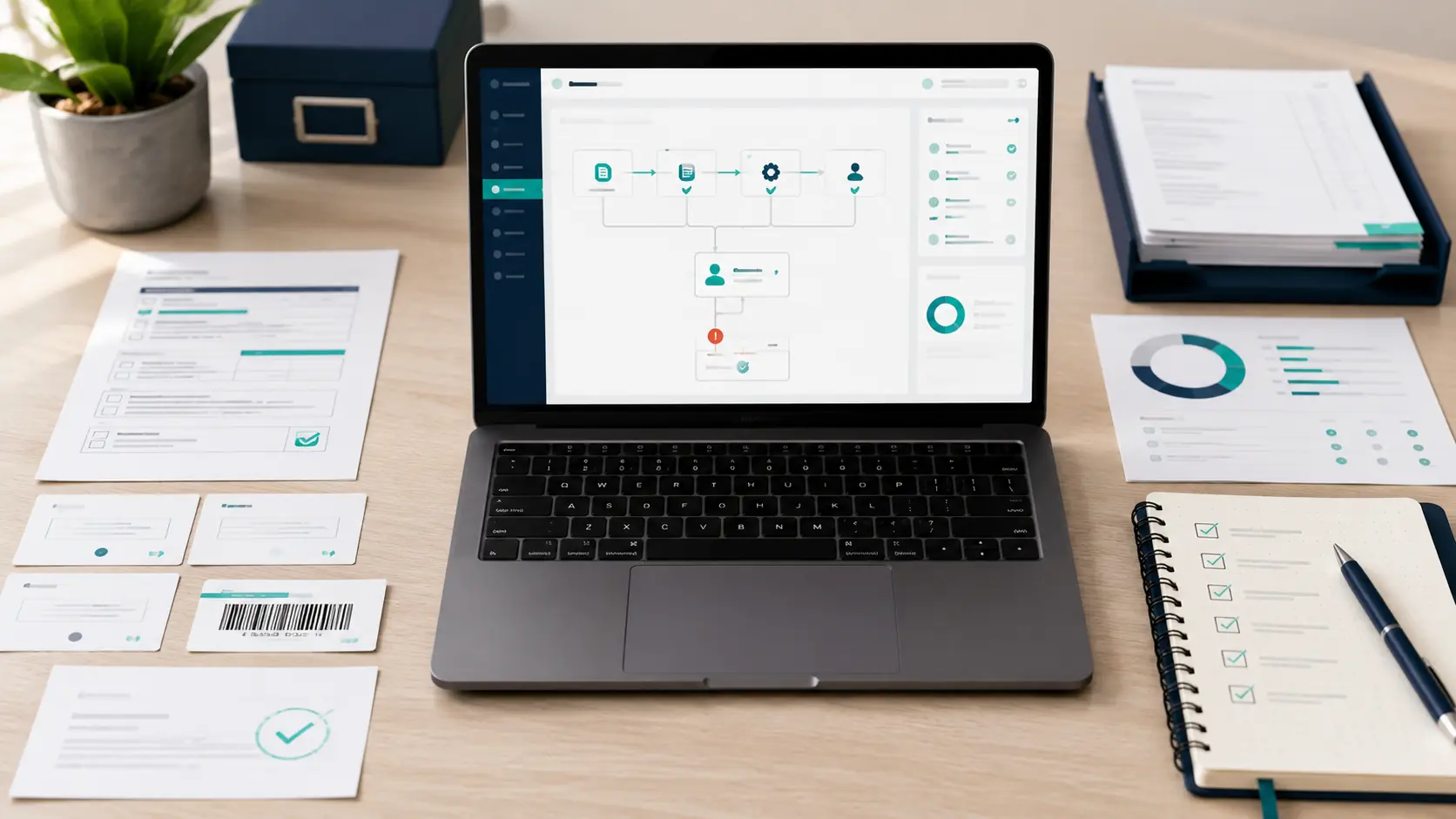
Document reality before automating
Automation does not repair an undefined process. Follow a real case from start to finish, including exceptions, approvals, duplicated records and decisions currently made through messages or spreadsheets. Speak with the people who perform the work, not only with its managers.
The result should identify the trigger, required information, responsible roles, business rules and expected output.
Choose a process with visible value
Good first candidates are frequent, rule-based tasks that consume time, create transcription errors or delay the next team. Avoid starting with a rare process full of unresolved exceptions.
Prioritize according to impact, frequency, technical feasibility and risk. A contained workflow that can be measured is more useful than a broad initiative without a clear owner.
Control should be part of the design
Define permissions, validation, approval thresholds, notifications, audit history and a way to handle exceptions. Automation should make the status of work easier to understand, not hide it behind a sequence nobody can inspect.
Keep people involved where judgment, accountability or sensitive decisions are required.
Connect systems deliberately
An integration should have a source of truth, clear field mappings and rules for duplicates, failures and retries. Confirm that each platform offers a supported way to exchange information and that credentials are protected.
When no reliable integration exists, a controlled intermediate step may be safer than fragile automation.
Launch in stages and measure
Start with a representative group, compare cycle time and error rates, and listen for new bottlenecks. Document ownership and support before expanding. The goal is not simply to eliminate clicks; it is to improve the operation while preserving visibility.
Frequently asked questions
Does every repetitive task need automation?
No. Frequency, business impact, stability and implementation risk should justify the effort.
Can automation connect existing systems?
Yes, when those systems provide reliable integration mechanisms or controlled data exchange.
Need to apply this to your operation?
We can help you turn this approach into a clear scope and practical path.
Explore automation and integrations →